

Thai farmers are at the cutting edge of sustainable rice production techniques like alternate wetting and drying—which reduces greenhouse gas emissions from rice by as much as 70%.
They are also eager adopters of drone technology for crop protection scouting and application. Meanwhile, the nation’s aquaculture industry is growing with the help of advanced soybean rations and coffee from Thailand’s northern mountains is earning a premium in gourmet markets. There’s even a small, growing dairy industry with historic ties to Denmark.
These stories and more intrigued 12 IFAJ members chosen by jury to participate in the IFAJ Exposure-4-Development (E-4-D) program in Thailand from September 25 to October 5, 2024. Sponsored by the U.S. Soybean Export Council (USSEC) and CropLife International, the E-4-D tour covered crop and livestock production in the central and northern regions of the country.
Caroline Stocks of the British Guild of Agricultural Journalists found her readers have a lot in common with Thai farmers.
“I’m always fascinated whenever I visit farms around the world to hear the similarities in the challenges they face: the struggle to find labour, rising costs of production and the need to produce food more sustainably,” she said.
“We were taught the Thai saying ‘same same, but different’ during the tour, and when it comes to global agriculture it really holds true.”
Hayato Ishii of the Japan Agricultural Journalists’ Association (JAJA) picked up on a similar theme.
“It was my first time to cover the agriculture sector in Thailand, and a very productive and rewarding experience,” said Ishii. “The common challenge for all these sectors is to cope with climate change, and Thailand is a huge experimental laboratory for practical application and practice.
“While there are more commonalities than I had imagined, such as the daily consumption of rice and fish as in Japan and a landscape blessed with abundant water, there are also differences: Same-same, but different. Even the way we eat rice, in Japan we eat in bowls, while Thai people eat on plates. I would like to write a reportage focusing on what is different and why.”
Added Jette Beck of the Danish guild, Dansk Fodevare- og Landbrugsjourlister, noted that though the original plan was to compare agriculture in Vietnam and Thailand, a late-stage pivot to focus solely on Thai farms was graceful and productive.
“IFAJ’s Thailand trip was a fantastic journey into Thai agriculture and farming. Despite the changes to the trip and the cancellation of the Vietnam part, the trip certainly did not feel like panic or that something was missing. Big kudos for that,” Beck said. “The trip was well balanced between hard agricultural material and slightly touristy places. I got a lot of good material home and I really appreciate having been part of the group.”
Maja Zagoricnik and Iztok Skofic of Slovenia’s guild, Drusto agrarnih novinarjev Slovenije, recorded hours of video for their travel program.
“The E4D tour in Thailand highlighted the vital role that agricultural journalism plays in promoting sustainable practices,” said Zagoricnik. “Thailand offered a wealth of compelling stories about sustainable agriculture and the challenges faced by farmers across the region. We were particularly impressed by the innovative strategies being employed to ensure food security, especially in fish farming and rice cultivation, which is a cornerstone of Thai agriculture. Witnessing firsthand how local farmers are adapting to climate change and implementing eco-friendly practices was both fascinating and educational.
“The insights we gained from the tour will definitely shape our future reporting on agricultural issues, with a focus on sustainability, local farming practices, and the broader impact of climate change on agriculture,” she added.
Over a year in planning and supported by generous grants—and on-the-ground logistical assistance—from the U.S. Soybean Export Council and CropLife International, E-4-D was designed to deliver an affordable, in-depth story-gathering opportunity for member journalists.
“The sponsorship and planning help from USSEC and CropLife International created wonderful opportunities to see a wide range of Thai agriculture, to meet farmers and advisors, and to piece together stories that address both the macro and micro issues that farmers face there,” said Steve Werblow, IFAJ president.
“In addition to our sponsors, we are very grateful for the hard work of Melanie Epp, Niels Damsgaard Hansen, and Craig Lester, who spent over a year and countless hours of research and contacting hosts to make the program possible,” Werblow added.
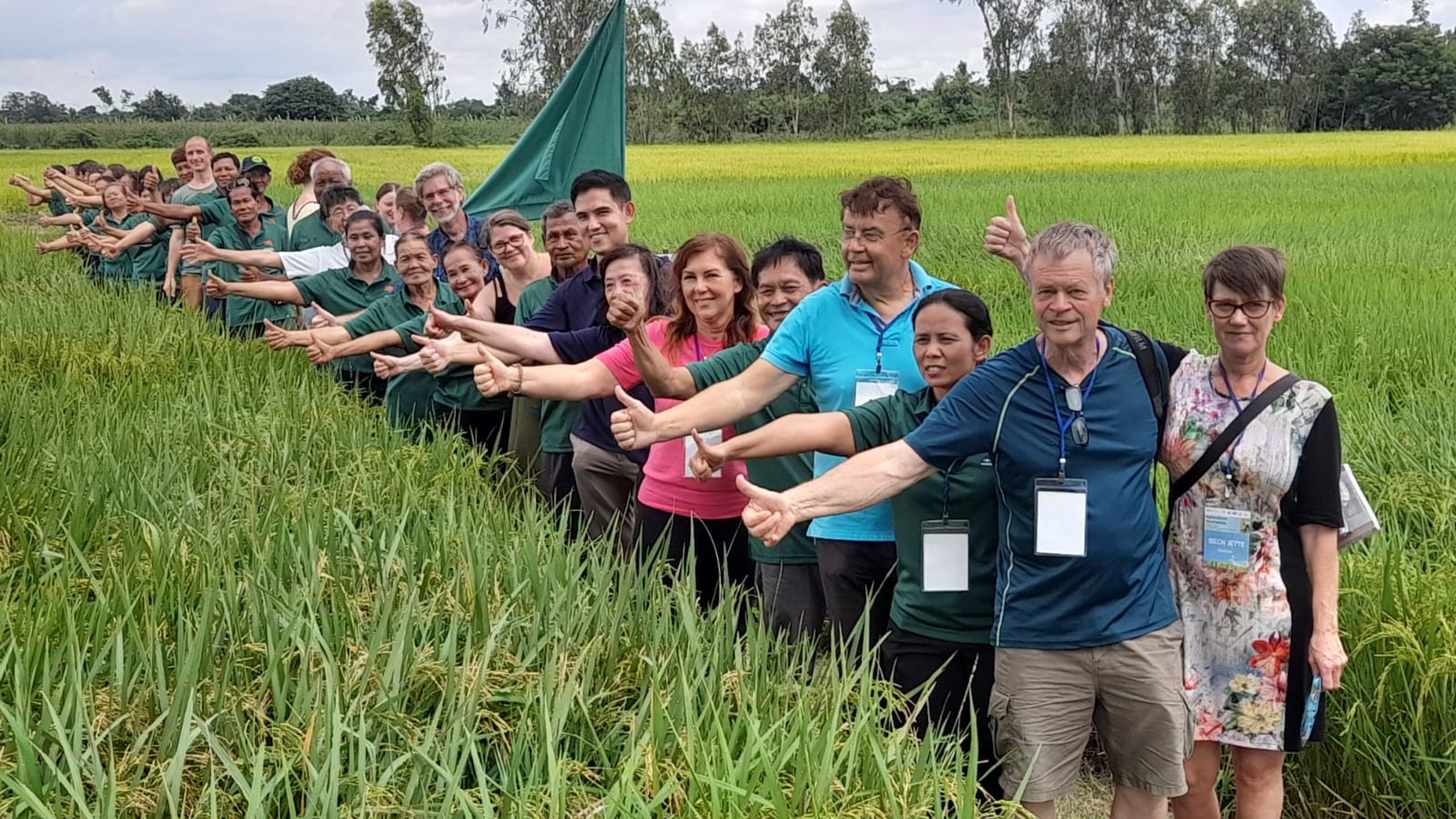
Journalists on the IFAJ Exposure-4-Development tour met a group of rice farmers in the Suphanburi province at a field day organized by CropLife International, CropLife Asia and their Thai affiliate, TAITA.
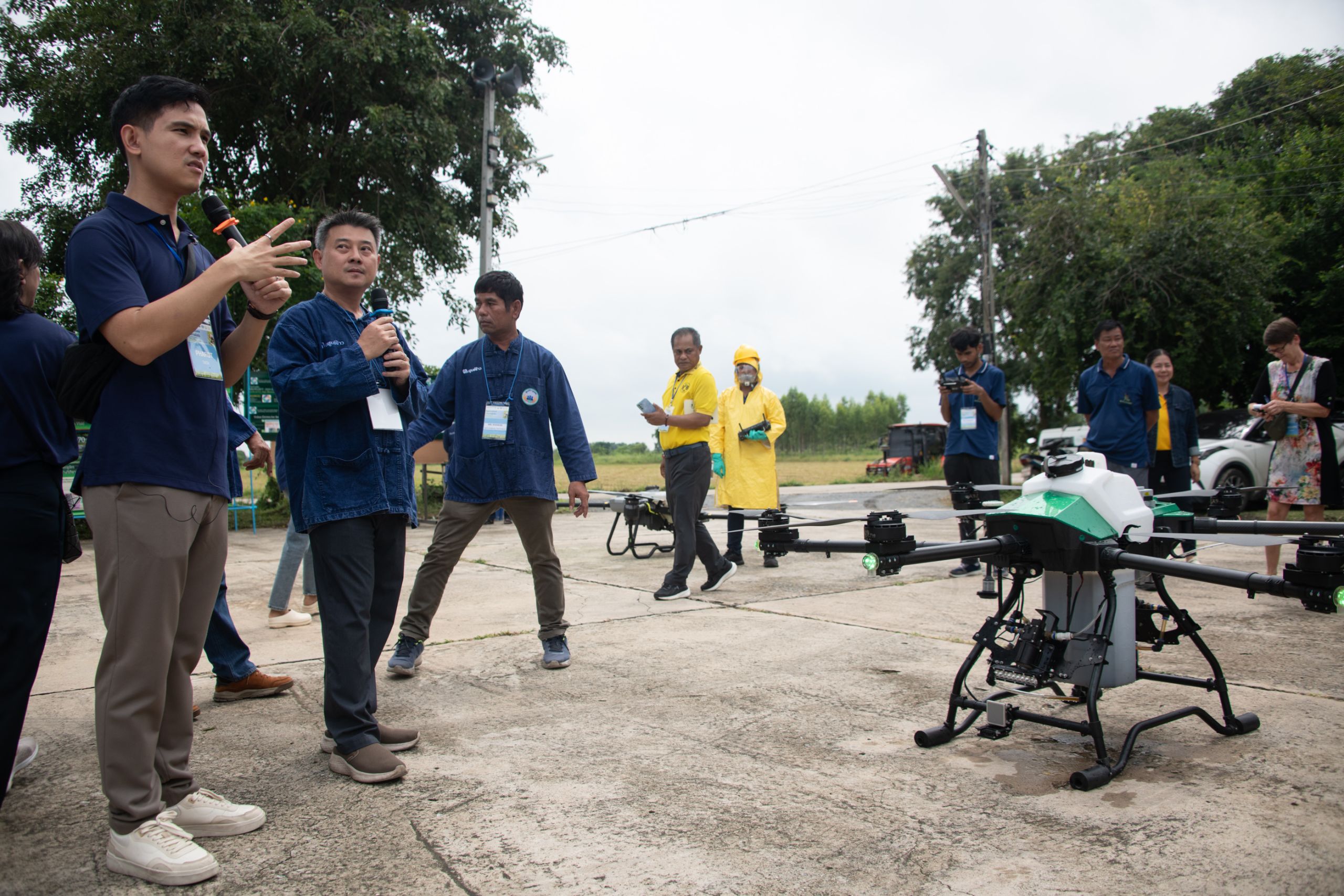
Pharot Tubkrai of TAITA (left) translates a presentation by executives of Segumo, a Thai manufacturer of agricultural drones.
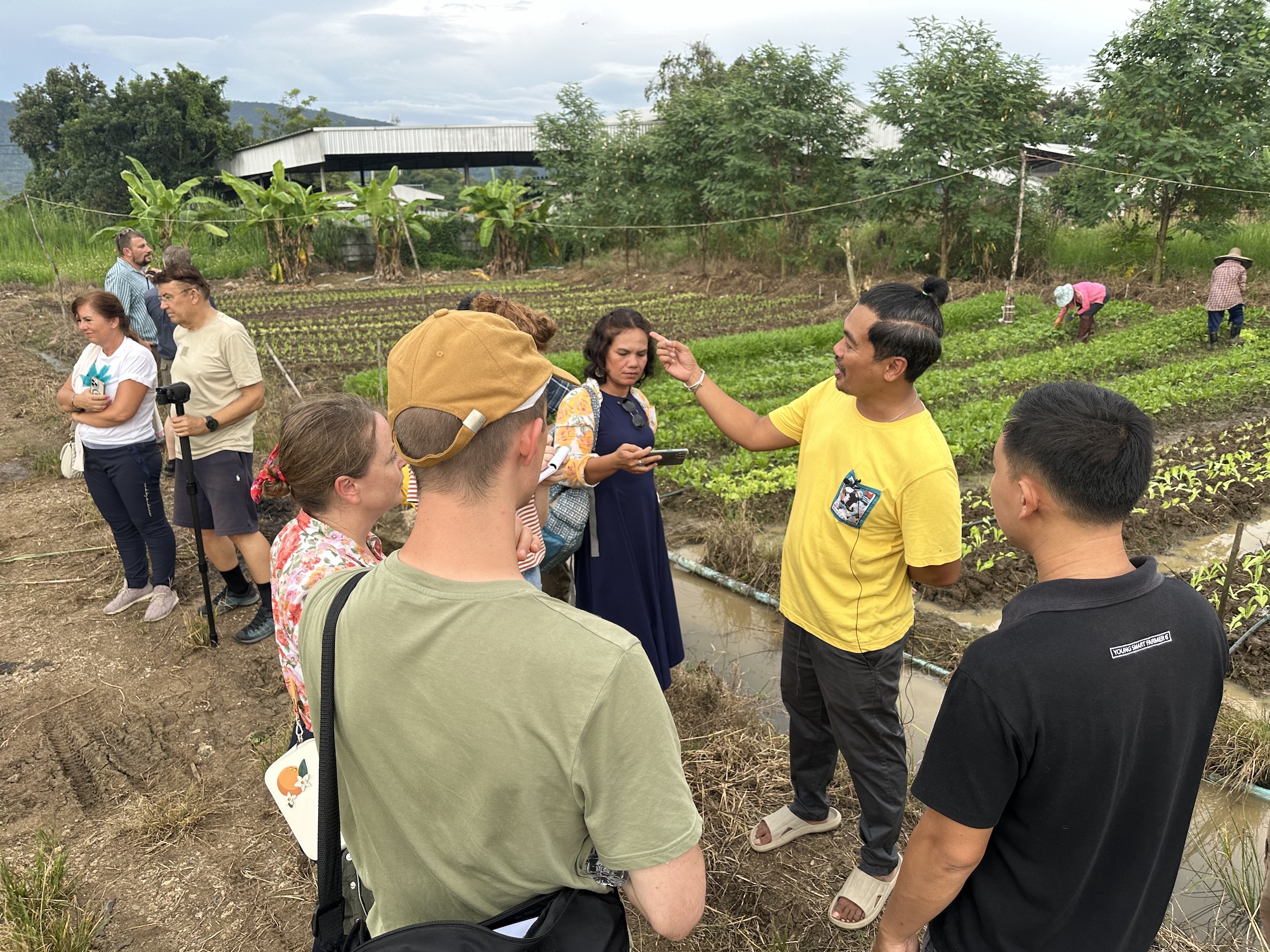
Pannathat Chomwong (yellow shirt) and Teewasit Wongpanya (black shirt) describe operations on their organic vegetable farm and agritourism venture.
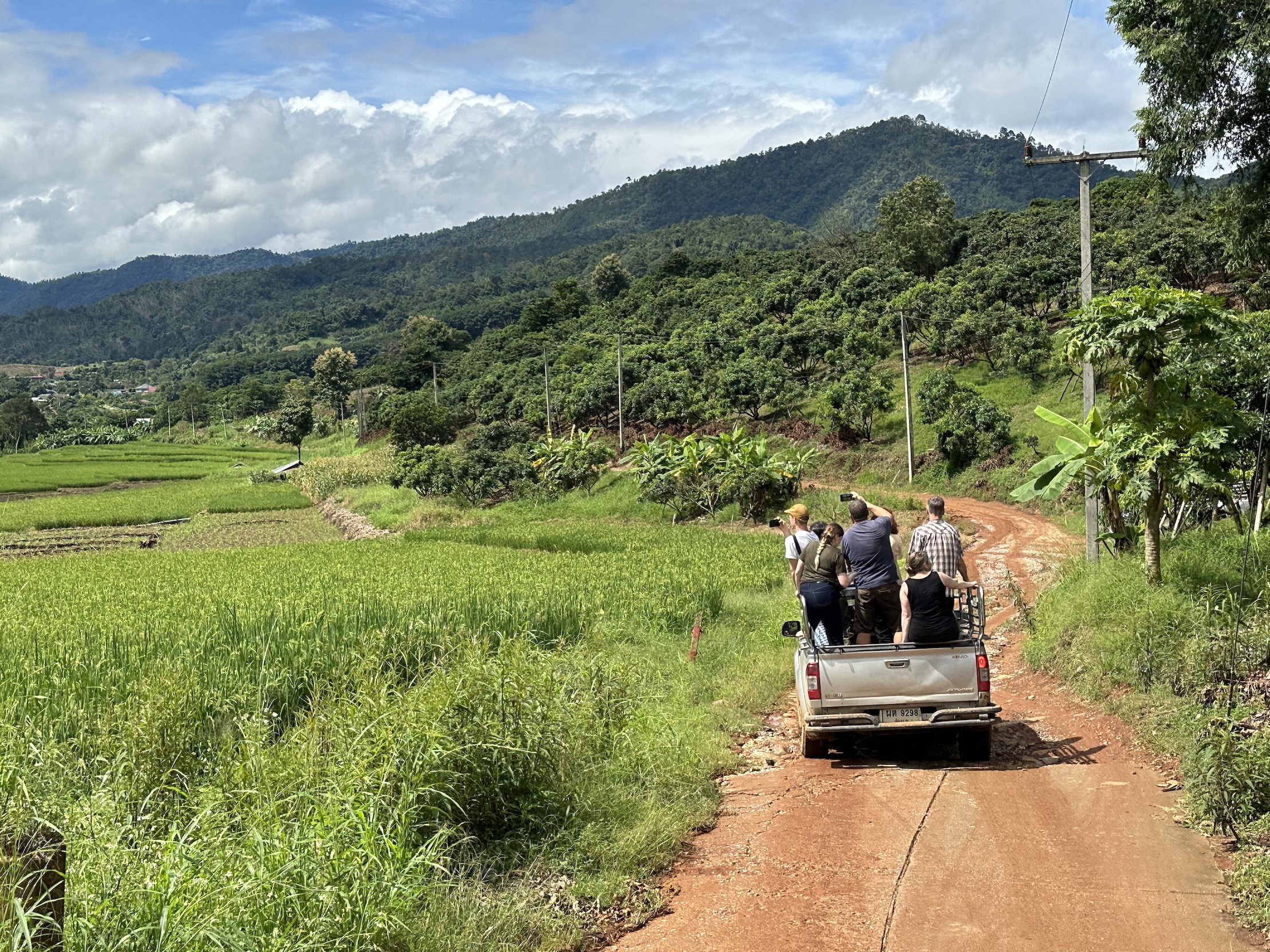
IFAJ members photograph the stunning landscape in Thailand’s northernmost province, Chiang Rai.
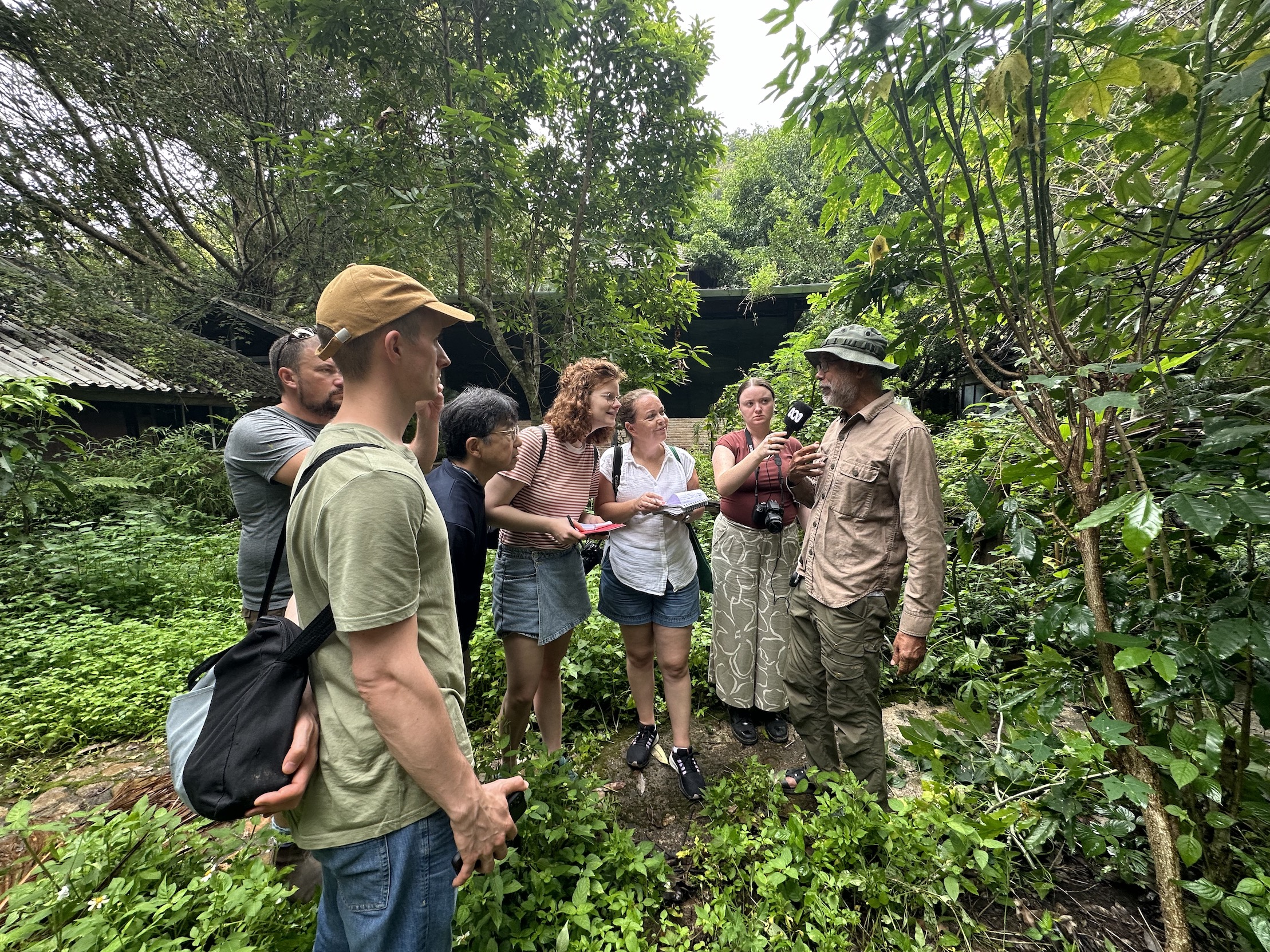
Coffee grower Wanlop Pasnanont of Nine One Coffee describes the evolution of Thailand’s growing gourmet coffee sector.